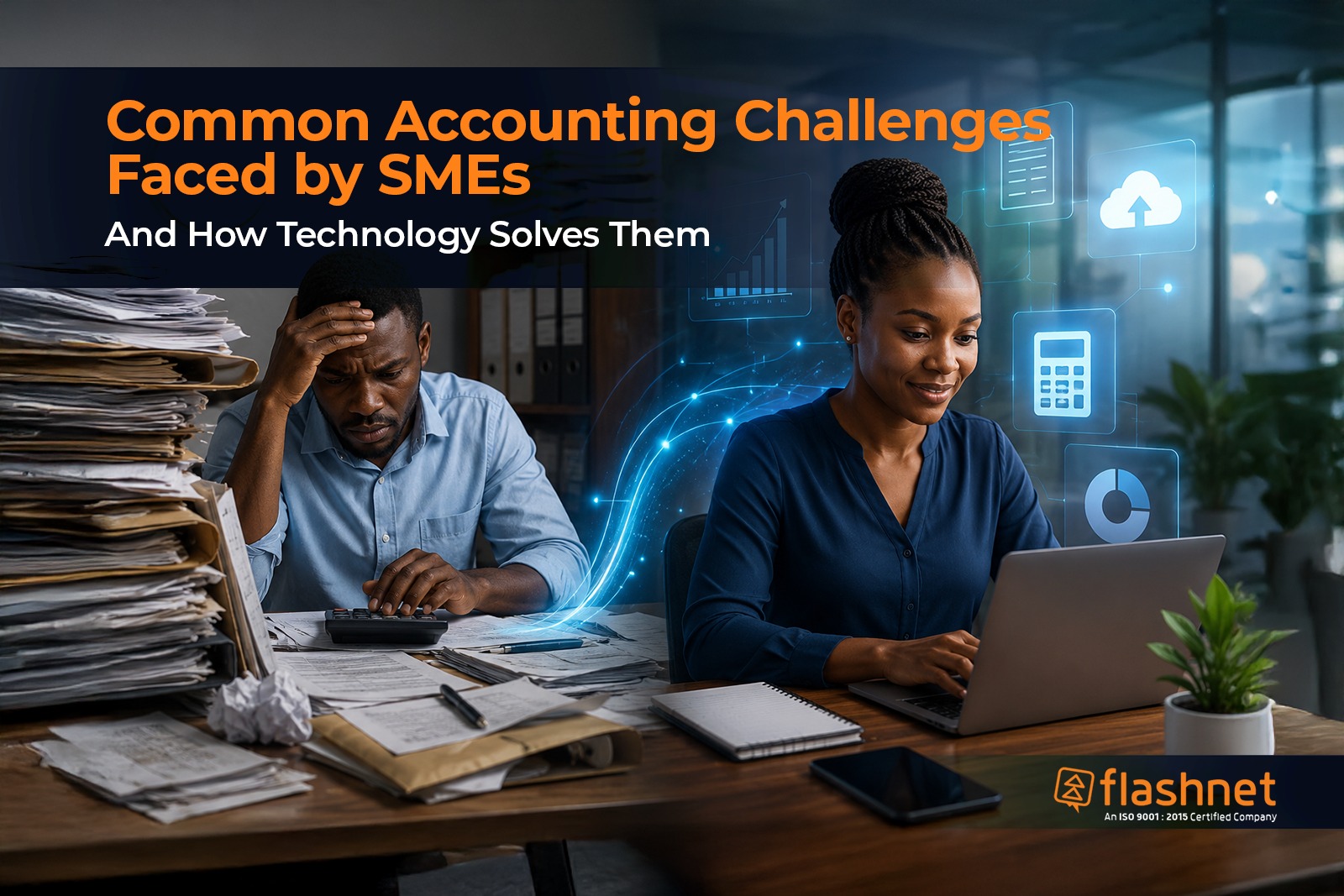
Common Accounting Challenges Faced by SMEs and How Technology Solves Them
Introduction
Small and Medium Enterprises (SMEs) play a critical role in driving economic growth, innovation, and employment across Tanzania. From retail businesses and service providers to manufacturers and professional firms, SMEs contribute significantly to the country’s business ecosystem.
Despite their importance, many SMEs face ongoing accounting and financial management challenges. Limited resources, manual bookkeeping processes, compliance requirements, cash flow constraints, and lack of real-time financial visibility often make accounting one of the most difficult aspects of running a business.
As businesses grow, these challenges become increasingly complex. Manual processes that once worked for a small operation can quickly become inefficient, error-prone, and time-consuming.
Fortunately, modern technology has transformed the way businesses manage their finances. Today’s cloud-based accounting solutions enable SMEs to automate routine tasks, improve accuracy, gain better financial visibility, and remain compliant with regulatory requirements.
Businesses seeking reliable Accounting Software in Tanzania are increasingly adopting digital accounting solutions to streamline operations and support sustainable growth.
In this article, we explore the most common accounting challenges faced by SMEs and how technology can help overcome them.
Why Effective Accounting Matters for SMEs
Accounting is more than simply recording income and expenses. It provides the financial information business owners need to make informed decisions.
Effective accounting helps businesses:
- Monitor cash flow
- Track profitability
- Manage expenses
- Prepare financial reports
- Maintain tax compliance
- Plan future growth
- Secure financing and investment
Without accurate financial information, businesses may struggle to identify opportunities, manage risks, and achieve long-term success.
Unfortunately, many SMEs continue to rely on manual processes that create inefficiencies and increase the risk of errors.
Challenge 1: Manual Data Entry and Human Errors
One of the most common accounting challenges faced by SMEs is excessive manual data entry.
Many businesses still use spreadsheets, paper records, or disconnected systems to manage financial information.
Manual processes often result in:
- Data entry mistakes
- Duplicate records
- Missing transactions
- Calculation errors
- Inconsistent reporting
Even small mistakes can lead to inaccurate financial statements and poor business decisions.
How Technology Solves This Problem
Modern accounting platforms automate routine bookkeeping activities, reducing the need for manual data entry.
Automation capabilities include:
- Invoice creation
- Expense recording
- Bank transaction imports
- Payment tracking
- Tax calculations
Businesses using Accounting Software in Tanzania can significantly reduce human errors while improving the accuracy and reliability of financial records.
Automation also frees employees to focus on higher-value activities rather than repetitive administrative tasks.
Challenge 2: Poor Cash Flow Management
Cash flow is one of the leading reasons why SMEs struggle or fail.
Many businesses generate revenue but experience difficulties because they lack visibility into:
- Outstanding invoices
- Upcoming expenses
- Customer payment delays
- Available cash reserves
Without accurate cash flow information, businesses may encounter unexpected financial difficulties.
How Technology Solves This Problem
Cloud-based accounting solutions provide real-time cash flow visibility.
Business owners can:
- Monitor incoming payments
- Track outstanding receivables
- Manage supplier payments
- Generate cash flow forecasts
Solutions such as Zoho Books Tanzania provide dashboards and reports that help businesses understand their financial position at any given time.
Real-time insights enable business owners to make proactive decisions before cash flow challenges become serious problems.
Challenge 3: Difficulty Managing Invoices and Payments
Invoice management is often a time-consuming process for SMEs.
Common challenges include:
- Delayed invoicing
- Missing invoices
- Payment follow-ups
- Manual payment reconciliation
- Tracking customer balances
These issues can slow down collections and negatively impact cash flow.
How Technology Solves This Problem
Modern accounting software simplifies invoicing through:
- Automated invoice generation
- Recurring invoices
- Payment reminders
- Online payment integration
- Customer account tracking
Businesses using Zoho Books Tanzania can automate much of the invoicing process, reducing administrative workload and accelerating collections.
Faster invoicing often leads to improved cash flow and healthier financial operations.
Challenge 4: Limited Financial Visibility
Many SME owners lack access to timely financial information.
As a result, they often make decisions based on assumptions rather than accurate data.
Without visibility into financial performance, businesses may struggle to answer important questions such as:
- Are we profitable?
- Which products generate the highest margins?
- Where are expenses increasing?
- How much cash do we have available?
How Technology Solves This Problem
Modern accounting platforms provide real-time reporting capabilities.
Businesses can access:
- Profit and loss statements
- Balance sheets
- Cash flow reports
- Expense summaries
- Revenue analysis
Solutions available through Zoho Tanzania enable business owners to access financial information from anywhere, helping them make informed decisions quickly.
Improved visibility supports better planning, budgeting, and strategic decision-making.
Challenge 5: Tax Compliance and Regulatory Requirements
Tax compliance remains a major challenge for many SMEs.
Businesses must manage:
- VAT calculations
- Tax reporting
- Financial record keeping
- Regulatory compliance requirements
Manual processes increase the likelihood of compliance errors, which can result in penalties and administrative challenges.
How Technology Solves This Problem
Accounting software helps businesses automate tax calculations and maintain organized records.
Benefits include:
- Accurate tax computations
- Better audit readiness
- Simplified reporting
- Reduced compliance risks
Many businesses work with a Zoho Authorized Partner in Tanzania to implement accounting systems that support local business requirements and improve compliance processes.
Technology helps ensure businesses remain organized and prepared for regulatory obligations.
Challenge 6: Difficulty Scaling Financial Operations
As businesses grow, accounting processes become more complex.
Organizations may need to manage:
- Multiple users
- Multiple locations
- Increased transaction volumes
- Larger customer databases
- Additional reporting requirements
Systems that worked for a small startup may no longer support business growth effectively.
How Technology Solves This Problem
Cloud-based accounting platforms are designed to scale with business requirements.
They allow organizations to:
- Add users
- Increase transaction capacity
- Manage multiple branches
- Integrate with other business systems
Businesses using Accounting Software in Tanzania can continue growing without constantly replacing their accounting infrastructure.
Scalable systems help ensure financial processes remain efficient as organizations expand.
Challenge 7: Lack of Integration with Other Business Systems
Many SMEs use separate systems for:
- Sales
- Inventory management
- Payroll
- Customer management
- Project management
Disconnected systems create inefficiencies and increase the risk of duplicate data entry.
How Technology Solves This Problem
Modern accounting solutions integrate with a wide range of business applications.
For example, businesses working with Zoho Tanzania can connect accounting functions with CRM, HR, inventory, and project management systems.
Integrated platforms improve data accuracy while reducing administrative workload.
They also provide a unified view of business operations across departments.
Challenge 8: Limited Access to Financial Information
Traditional accounting systems often require users to be physically present in the office.
This can limit flexibility and slow decision-making.
How Technology Solves This Problem
Cloud accounting platforms allow authorized users to access financial information securely from anywhere.
Business owners can:
- Review reports remotely
- Approve expenses
- Monitor cash flow
- Track business performance
Solutions such as Zoho Books Tanzania support mobile and remote access, making financial management more flexible and responsive.
This capability is particularly valuable for businesses with multiple locations or remote teams.
Why SMEs Are Moving Toward Cloud Accounting
Cloud accounting has become increasingly popular among SMEs because it offers significant advantages over traditional systems.
Benefits include:
- Lower infrastructure costs
- Automatic updates
- Enhanced security
- Real-time reporting
- Improved collaboration
- Scalability
- Anywhere access
Businesses increasingly seek guidance from a Zoho Authorized Partner in Tanzania to ensure successful implementation and customization of cloud accounting solutions.
With the right technology and support, SMEs can transform accounting from a time-consuming administrative function into a strategic business advantage.
Choosing the Right Accounting Technology
When selecting accounting software, SMEs should evaluate several factors:
Ease of Use
The platform should be intuitive and easy for employees to learn.
Scalability
The system should support future business growth.
Reporting Capabilities
Strong reporting tools provide valuable financial insights.
Integration Options
The software should integrate with existing business applications.
Support and Implementation
Working with experienced implementation partners can improve adoption and long-term success.
Many organizations partner with a Zoho Authorized Partner in Tanzania to ensure their accounting systems are configured correctly and aligned with business requirements.
Conclusion
Accounting challenges can create significant obstacles for SMEs, affecting cash flow, profitability, compliance, and business growth. Manual processes, limited financial visibility, invoicing difficulties, compliance requirements, and scalability issues continue to impact many organizations.
Fortunately, modern technology provides effective solutions to these challenges. Cloud-based accounting platforms help businesses automate routine tasks, improve accuracy, gain real-time insights, and maintain compliance while supporting future growth.
Businesses evaluating Accounting Software in Tanzania should look for solutions that offer automation, scalability, reporting capabilities, and integration options. Platforms supported through Zoho Tanzania continue to help organizations modernize financial operations and improve efficiency.
By embracing digital accounting technologies and implementing the right systems, SMEs can strengthen financial management, make better business decisions, and position themselves for long-term success.
Last Updated on July 2, 2026 by Nandu G N